main

Archive | Affiliated club news

Why Bushwalking NSW Women’s Week Matters

For many women, the idea of bushwalking is appealing — fresh air, movement, time in nature — but the reality can feel intimidating. Questions like Where do I go? Who do I go with? Is it safe? Do I have the right skills? are often enough to stop people before they start.

This matters, because we know the benefits of walking — particularly in natural environments — are profound. Regular walking is one of the most accessible forms of physical activity, yet fewer than half of Australian women meet recommended physical activity guidelines. At the same time, rates of stress, anxiety and social isolation among women continue to rise, particularly following years of disruption, caring pressures and cost-of-living stress.

Bushwalking NSW Women’s Week exists to address these challenges — not with lectures or rules, but with experience.

With the support of Women NSW and Outdoors NSW ACT, Bushwalking NSW is hosting a state-wide bushwalking event, inviting women to get out of their comfort zone and explore around the next bend.

Across NSW, local bushwalking clubs are opening their doors and offering women a supported introduction to walking in nature. These aren’t extreme hikes or endurance challenges. They are local, entry-level walks led by experienced volunteers, designed to remove uncertainty and build confidence.
The evidence for this approach is compelling. Research consistently shows that spending time in green spaces can reduce stress, anxiety and symptoms of depression, while improving mood, focus and overall wellbeing. Walking in nature has also been shown to deliver greater mental health benefits than walking in urban or indoor environments alone. When people walk together, the benefits multiply — combining physical activity with social connection, belonging and peer support.
For women in particular, social connection is a critical protective factor for mental health. Group-based outdoor activities create space for conversation, friendship and shared discovery — especially important for women who may feel isolated, new to an area, returning to activity after a break, or unsure how to engage with outdoor recreation.

Bushwalking NSW’s Women’s Week also challenges a common misconception: that bushwalking requires specialist skills, expensive gear or distant locations. In reality, many of the most rewarding walking experiences are close to home — on local tracks, reserves and bushland — and supported by clubs deeply embedded in their communities.

By the end of the week, the hope is simple. That participants know where they can walk next, who they can walk with, and how to stay involved locally. Because when women feel welcome outdoors, the benefits don’t stop with a single walk. They ripple through families, communities and the places we care for — strengthening health, connection and stewardship of the bush for the long term.

See evidence below
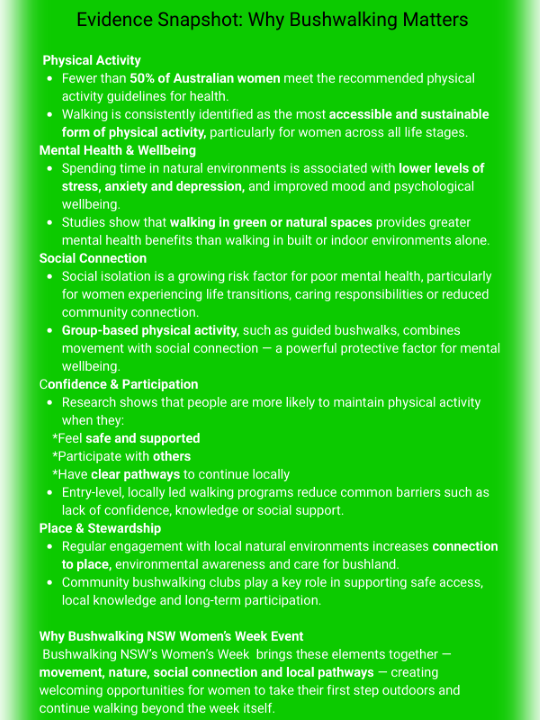
Evidence Snapshot: Why Bushwalking Matters

Physical Activity

  • Fewer than 50% of Australian women meet the recommended physical activity guidelines for health.
  • Walking is consistently identified as the most accessible and sustainable form of physical activity, particularly for women across all life stages.

Mental Health & Wellbeing

  • Spending time in natural environments is associated with lower levels of stress, anxiety and depression, and improved mood and psychological wellbeing.
  • Studies show that walking in green or natural spaces provides greater mental health benefits than walking in built or indoor environments alone.

Social Connection

  • Social isolation is a growing risk factor for poor mental health, particularly for women experiencing life transitions, caring responsibilities or reduced community connection.
  • Group-based physical activity, such as guided bushwalks, combines movement with social connection — a powerful protective factor for mental wellbeing.

Confidence & Participation

  • Research shows that people are more likely to maintain physical activity when they:
    • Feel safe and supported
    • Participate with others
    • Have clear pathways to continue locally
  • Entry-level, locally led walking programs reduce common barriers such as lack of confidence, knowledge or social support.

Place & Stewardship

  • Regular engagement with local natural environments increases connection to place, environmental awareness and care for bushland.
  • Community bushwalking clubs play a key role in supporting safe access, local knowledge and long-term participation.

Why Bushwalking NSW Women’s Week Event
Bushwalking NSW’s Women’s Week brings these elements together — movement, nature, social connection and local pathways — creating welcoming opportunities for women to take their first step outdoors and continue walking beyond the week itself.

Supported by

 

Kimberley Wilderness Expedition

Kimberley Wilderness Expedition by Stephen Millard

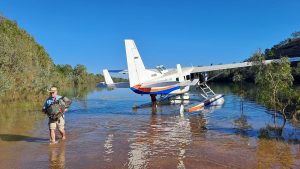
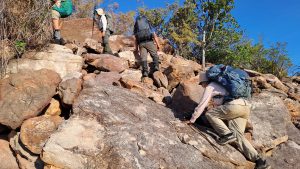
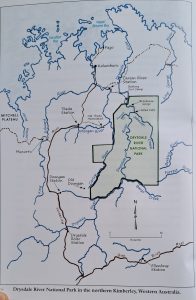
Imagine a National Park that is so remote that it has no signage or roads, but has books published about its trove of unique and ancient rock art: think of Drysdale River National Park in East Kimberly. Last June we were invited by fellow Byron Hikers Club members on a 12 day commercial adventure so inaccessible that we had to fly there in a float plane and land on the Drysdale River.

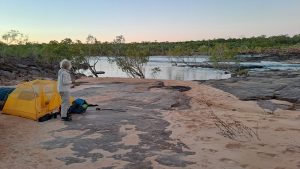
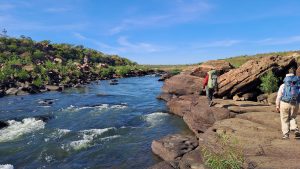
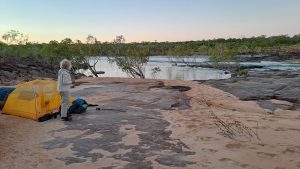
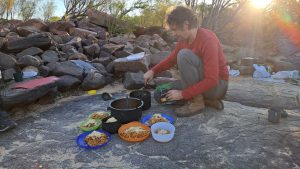
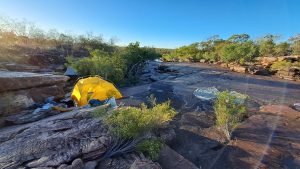
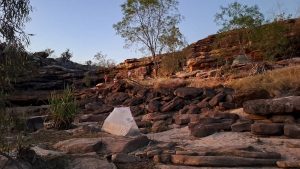
After landing next to a shallow sandy beach and unloading our packs and the food, we set off on an easy 7 kilometre walk through tall grass along the river bank. After several cooling-off swims and lunch, we arrived at our first camp which was on an expanse of smooth rock right beside the river. Our guide, Sebastian, soon had a 3 course dinner prepared for us. It started out with a first-day luxury; perfectly ripe Haas avocados with Seb’s own vinaigrette dressing, rice crackers with re-hydrated hummus and beetroot dips followed by pasta with lots of veggie chunks that Seb had dried himself. All the other evening meals were amazing and featured treats such as creme brolee with rehydrated mango cheeks.


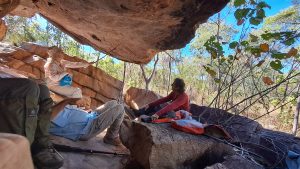
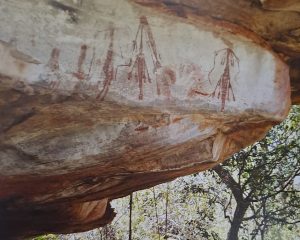
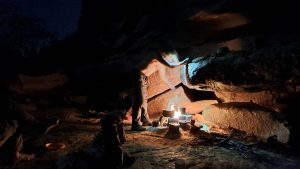
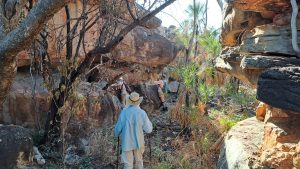
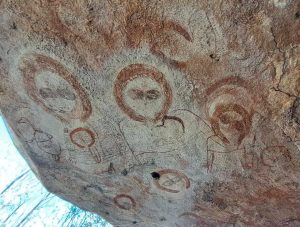
We visited the first of many rock art galleries the next day, not far from our river camp. The paintings included figures that had been termed ‘Bradshaw’ and are now known as Gwion Gwion. They are very fine-lined pictures, often of dancers in elaborate regalia that had been recorded in early photographs of local Aborigines as well as animals like the extinct thylacene and ghostly Wandjina figures. Ochre has been colonised by cyanobacteria to make indelible ‘paint’ that even survives galleries that are flooded during each wet season. The only reliable way of dating these works is analysing wasp nests that may have been built over a painting. The oldest such nest goes back 24,500 years! And that might only be a fraction of their age! As we visited gallery after gallery we kept thinking about what was happening in other parts of the world back then, tens of thousands of years before the advent of agriculture in the Middle East or the pharaohs on the Nile. It is mindboggling.


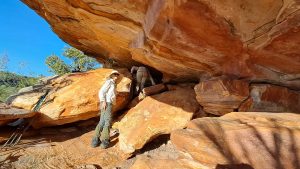
We followed the river downstream for the next few days visiting art sites in shady rock overhangs and camping on stunning river beaches. The river diverted to the east, swung north, then west around three sides of a giant square shape. We walked away from the river through lightly timbered dry savannah in a northerly direction along the fourth, ‘western side’, using one of many fault lines in this plateau of rock to descend a rocky escarpment back to the river. Salt water crocs potentially inhabit this section of the river, even though it is about 100km upstream. Hence we were careful not to swim in the main stream.


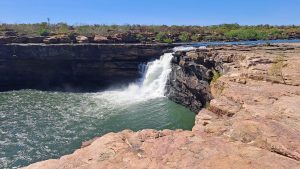
After several more days exploring the terrain and more art whilst moving upriver, we scrambled around the 30 metre high Solea Falls which prevent crocs going upstream. It was relaxing to know that we could swim safely again. After 9 days we were back at our first camp site where we picked up a stash of more food that enabled us to do a final 3 day loop up Planigale Creek. We camped on two different ‘quiet’ cascades, this being a much smaller watercourse than the Drysdale. At the second camp the stream slid about 5 metres over a waterfall into a rock pool as big as several tennis courts. Seb had observed freshwater croc tracks on our way in but we didn’t see any crocs despite much swimming. The next day we had 5 brolgas flying above us as we explored more creekside galleries. They eventually landed just downstream from where we stopped for lunch.

Although every camp on the hike was different, every one was a ‘to die for’ location. On the last day we used another faultline to break out of our ‘continent’ of rock that prevents any vehicle access to this whole area. We were then in an island of savannah that contained a number of small wetlands until we reached the original plane landing site. Here we swam and camped for the last night. The float plane picked us up the next morning as planned. As it droned over the rocky landscape back to Kununurra, I kept thinking about the land below that was so full of rock art and so empty of people. Black fellas moved into a mission to the north a century ago and have never gone back. Only a few of us white fellas have ever visited this magic land. Only a handful of people like our guide have made the effort to explore this remote wonderland.

Initially I couldn’t get my head around the cost of $6000 for this trip because I’m a do-it-yourself hiker who had never paid for a guided trip. Turns out it is quite reasonable considering the first plane airfare is a large part of the cost and that Sebastian is a legend as a guide in the Top End. For me it was a trip of a lifetime and worth every cent. We are recommending it to our Club members for this June.

We used the ‘Mount Connelly’ map on Avenza. Search Gwion Gwion in Wikipedia for rock art references. See here for details of this June’s expedition.

Canberra Bushwalking Club ACT Top Ten Peaks

ACT Top Ten Peaks
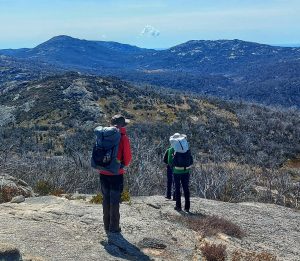
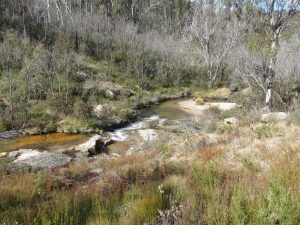
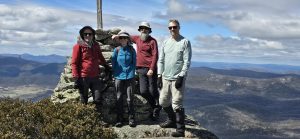
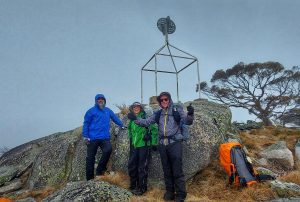
A party of four intrepid CBC walkers, led by Stephen M, have just returned from six days of bushwalking in the remote areas of Namadgi NP. Much of the walk was along the trackless, rugged ranges that make up the ACT/NSW border.
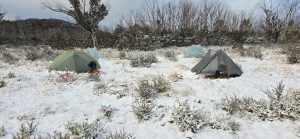
The objective was to visit the 10 highest named peaks in the ACT. Unfortunately, the untimely snow, ice and strong winds conspired to abandon an attempt on two of the peaks (Mts Namadgi and Burbidge). Still, they had an awesome time walking in the spectacular and wild country right on our doorstep.
We are very fortunate for the hard work of those who were instrumental in securing this wilderness area as a National Park.
Happy 40th Birthday Namadgi NP!
Photo credits: Kirk H, Daniel P, Jacqui R, Garry B

Sydney Christian Bushwalkers turns 50

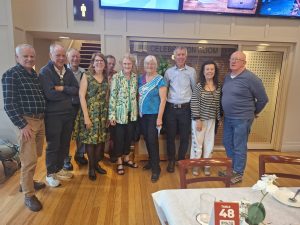
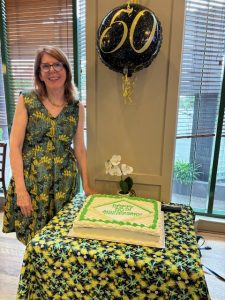
Sydney Christian Bushwalkers recently held 50th birthday celebrations over a weekend of walking in the Kiama area, followed by a dinner at Burwood RSL Club. The events attracted current and former members, who are pictured below in a group photo. In the second photo, the anniversary organiser Judith Ramm poses with the 50th birthday cake.

The non-denominational Christian bushwalking club, Scripture Union Bushwalkers, was founded by the first club president Graham Morrison in July 1974. The inaugural walk was an overnight trip to Blue Gum Forest, in the Grose Valley near Blackheath – very cold at that time of year! A few years later Peter Onus took over the role of president.

The club had quite an active program of day-walks, overnight walks, and multi-day treks in those early years of the 1970s, 1980s, and into the early 1990s, with full use of Easter weekends, October long weekends, and Anzac weekends. Naturally there were numerous day-walks as well, which were the mainstay of the program. Some of the day-walks were fairly easy, while others could be quite hard and rough, occasionally including bushy and rugged off-track sections.

In the late 1980s and the early 1990s the number of members who liked overnight walks gradually reduced as people went their separate ways. As a result, day-walks became the main feature of the club’s program, complimented by occasional overnight walks.

In the new millennium, Scripture Union decided that any affiliated groups should follow the organisation’s policies and procedures. The club members considered that the link with Scripture Union had become tenuous, and a stand-alone club would be the better option. There was some debate over the name change, but eventually Sydney Christian Bushwalkers was incorporated, with its own policies and procedures appropriate to a bushwalking club.

Although membership numbers have declined, to remain steady around 67, the club has continued to have an active program. Many of the older club members have been in the club for several decades, and as the general membership age has increased, the type of walks has changed to moderate and easy walks on a Saturday, mixed with occasional urban walks and car camping or cabin weekends.

Christians of all ages and denominations are welcome, and visitors can attend 3 walks before being asked to join the club.

The Bush Club – 85th Birthday Celebrations

The Bush Club

Bush Club Birthday Celebration Walks

The Bush Club came into existence on 19th September 1939. The Club was founded by Marie Byles and Paddy Pallin. Both Marie and Paddy believed that the rigorous standards of the tests, pack walking etc., for gaining entry to bush walking clubs was too high. They believed this prevented those who simply want to walk in and appreciate the bush from joining clubs. Their belief was that a love of the bush and a willingness to protect its environment should be the main qualification criteria along with making friendships through bush walking. These core values remain the same for the Bush Club today.

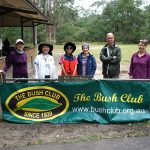
Today the Club has 890 members. While the Club has grown considerably over the years it remains thru to the core values of its founders. The Club places great emphasis on celebrating the creation of the club each year. We mark certain milestones with special events.
The Bush Club celebrated its 75th anniversary in 2014 by completing club walks in 75 national parks all over the world. The walks ranged from the Blue Mountains, the Lake District in England, Horton Plains in Sri Lanka to Los Glaciares in Argentina and were completed between May 2013 and end of August 2014. See here for more information.

The Club celebrated its 80th anniversary in 2019 by completing 80 different club walks by 80 different leaders. The walks were completed between December 2018 and October 2019 from the Ophir Goldfields in NSW Central West to the Garden of Stone and as far afield as the Kerry Way in Ireland. More info.

This year we celebrated the 85th Birthday of the Bush Club. We asked our Leaders to put on 85 ‘trig’ walks / cycles to mark the occasion. As always, our Leaders responded enthusiastically and completed the 85 ‘trig’ events. The trigs were visited between October 2023 and October 2024. These walks and cycles took place throughout NSW, Interstate and the Lake Dunstan trig was claimed on a Club cycle in New Zealand.

All our special birthday events are recorded and a page created on the Bush Club Website for future members to look back on and continue the tradition into the future.

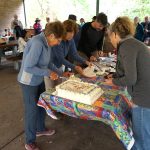
Along with the special occasions, we celebrate the Club’s birthday each year with walks to a central location within a National Park around Sydney. This year the walks finished at Commandment Rock, Lane Cove NP. There was tea, coffee and the birthday cake. We had in excess of 50 members attending the celebrations.

Iluka Day Walk – Clarence Valley Bushwalkers

Iluka Day Walk 18 August 2024 – Clarence Valley Bushwalkers Trip Report, by Christine Casey, Secretary

As Christine noted “We are very lucky in this part of the world to have rainforest and beaches right next door to each other, with a river ferry ride thrown in”.

On a perfect winter’s day ten of us met at Yamba jetty for a ferry trip across to Iluka, where we met up with another two of our bushwalkers, to walk around the foreshore to the World Heritage listed littoral rainforest at Iluka.

Although we have done this trip a number of times before, each time it is different. This time we did not have an East Coast Low sitting off the coast, blowing so hard that the National Park was closed, and generating massive swells and waves that threatened to sweep us off the breakwater.

Nor was there a power outage that closed the coffee machines in Iluka. And the track through the rainforest wasn’t so flooded that we had to either bush bash through the smilax creeper or wade waist deep the dark tannin stained creek that used to be the track.

This time we just had a cool westerly wind at the Yamba that had us pulling on jackets and fleeces, then finding shelter downstairs in the ferry for the crossing. Morning tea was in Iluka’s riverside park, out of the wind and in the sun.

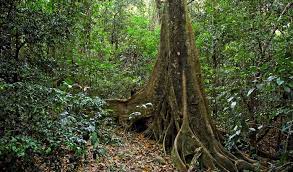
The walk itself was relaxed and enjoyable. Conditions were very dry through the rainforest, but cool and shady under the tall canopies covered in vines and epiphytes. National Parks had gone to a lot of effort to replace the old faded signage along the track and at Iluka Bluff picnic shelter. There were now impressive new versions with interesting information about the birds, plants and landforms along the track.

We had lunch at the beach and picnic area at Iluka Bluff then returned in time to catch the 2:30 ferry back to Yamba. Another very pleasant day with friends enjoying our spectacular part of the world.

Byron Hikers – Extreme adventure in the remote East Kimberley Western Australia!

Byron Hikers – Extreme adventure in the remote Kimberley!

Four members of Byron Hikers Club recently undertook an amazing adventure – a 14-Day exploration of the Drysdale River in the Solea Falls area. Drysdale River National Park in the northern tip of the remote East Kimberley is one of the least accessible national parks in Australia. There are no public roads, no airstrips and no tracks – the park is pack raft or seaplane access only.

The Drysdale River flows through a magnificent pristine and untouched landscape. The Drysdale River NP is the kingdom of nature and showcases vast tracts of Kimberley wilderness featuring open woodland, gorges, cliffs, waterfalls and the creeks of the Drysdale River. The many water holes allowed for lots of swimming and every night our camp was a ‘dream’ site.

However, the real treasure of this magical place are the hundreds of hypnotic Gwion Gwion figures, an ancient Aboriginal painting style describing a forgotten time of dancing and ceremonies. Byron Hikers visited different rock shelters every day. See the Byron Hikers Facebook page for more information.

Remote Area First Aid Course – South Coast Bushwalking Club

Remote Area First Aid Course – South Coast Bushwalking Club

South Coast Bushwalking Club are organising a Remote Area First Aid Course which will be run by Highlands First Aid.

It will be held on Saturday 10 and Sunday 11 August, 2024 in Austinmer (northern suburbs of Wollongong) from 8:30am to 4:30pm (please arrive 8:15am on the first day).

The course will be run by Highlands First Aid. Please register and pay the full cost of the course ($245) to Highlands First Aid here.

HLTAID013 – Provide First Aid in remote or isolated site

The cost of the hall is $24 per person ( payable to SCBW – bank details will be provided).

You will need to bring lunch and snacks for both days (there are kitchen facilities available).

There is an option to sleep overnight at the hall for anyone travelling long distances.

Wear comfortable clothes that are suitable for practical first aid.

For more information contact Belinda at South Coast Bushwalking Club by email – scbw.trainingoffficer@gmail.com


2024 Bushwalking NSW Photo Competition

2024 Bushwalking NSW Photo Competition (Edited)


Congratulations to our 2024 Winners:

Thank you to everyone who entered the 2024 BNSW Photo Competition. It was so hard to judge as all of your images were so incredibly good! A big thank you to our amazing sponsor Paddy Pallin for the wonderful prizes!

Congratulations to our winners:

Edna Frougas (1st) – Sphinx Rock Cliff

Laurence Outim (2nd) – Walking as a Team, Cascade Trail, Kosciuszko NP

Rhonda Vile (3rd) – We all love a bushwalk, Galore Hill NR

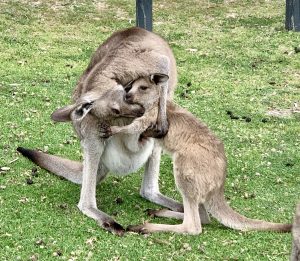
Robyn Christie (honorable mention) – Mothers Love, Murramarang NP

Competition Details (closed now):

Show us your best shots!

Do you take beautiful photos of people and scenery in the bush?

We want to share them with the world!

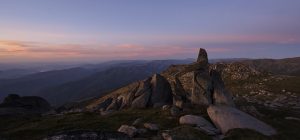
Image: Sunset from Mt Townsend, Robert Croll


Enter our competition to be in the running to win over $230 of great Paddy Pallin prizes! See your photos featured in our newsletters and on our website!

Share your NSW/ACT photos of bushwalkers or wildlife in nature or a national park scene.

Please share your photos in these categories:

  • People bushwalking as team enjoying nature in NSW/ACT
  • NSW/ACT national park scene
  • NSW/ACT wildlife

Simply email your images or a public link to your photos (eg google drive, dropbox or photo share apps) to Bushwalking NSW here.

The Competition closed on 31 August 2024.


Great Paddy Pallin gear to be won!

Smartwool patch beanie
Gear aid hybrid gear clip
Arcade performance stretch belt
Ultralight dry sack 20L
Nalgene glow in the dark bottle
Nalgene wide mouth bottle 32oz


A name change and rebrand for Bushwalking NSW?

A name change and rebrand for Bushwalking NSW?

By Jon Gray, Bushwalking NSW Vice President and Young People in Clubs (YPIC) Working Group.

I believe BNSW and bushwalking clubs in Australia need a change in name and a rebrand to remain strong and relevant into the future.

It is evident that most clubs in NSW and the ACT are not attracting younger members. This raises concerns regarding the long-term viability of our clubs and indeed the whole bushwalking club movement in our State and Territory. I am convinced a significant change is required; we need to ‘turn the ship around’.

As already expressed in a previous Opinion Piece, I believe the crux of our problem lies in the regrettably less-than-exciting image of bushwalking clubs. Our clubs are not widely perceived as exciting and cool, but regrettably as rather staid and boring, and increasingly, full of retirees (like me!). We need a subtle change of image, a rebrand, to help inspire and attract a younger cohort into our clubs, to re-energise our whole movement.

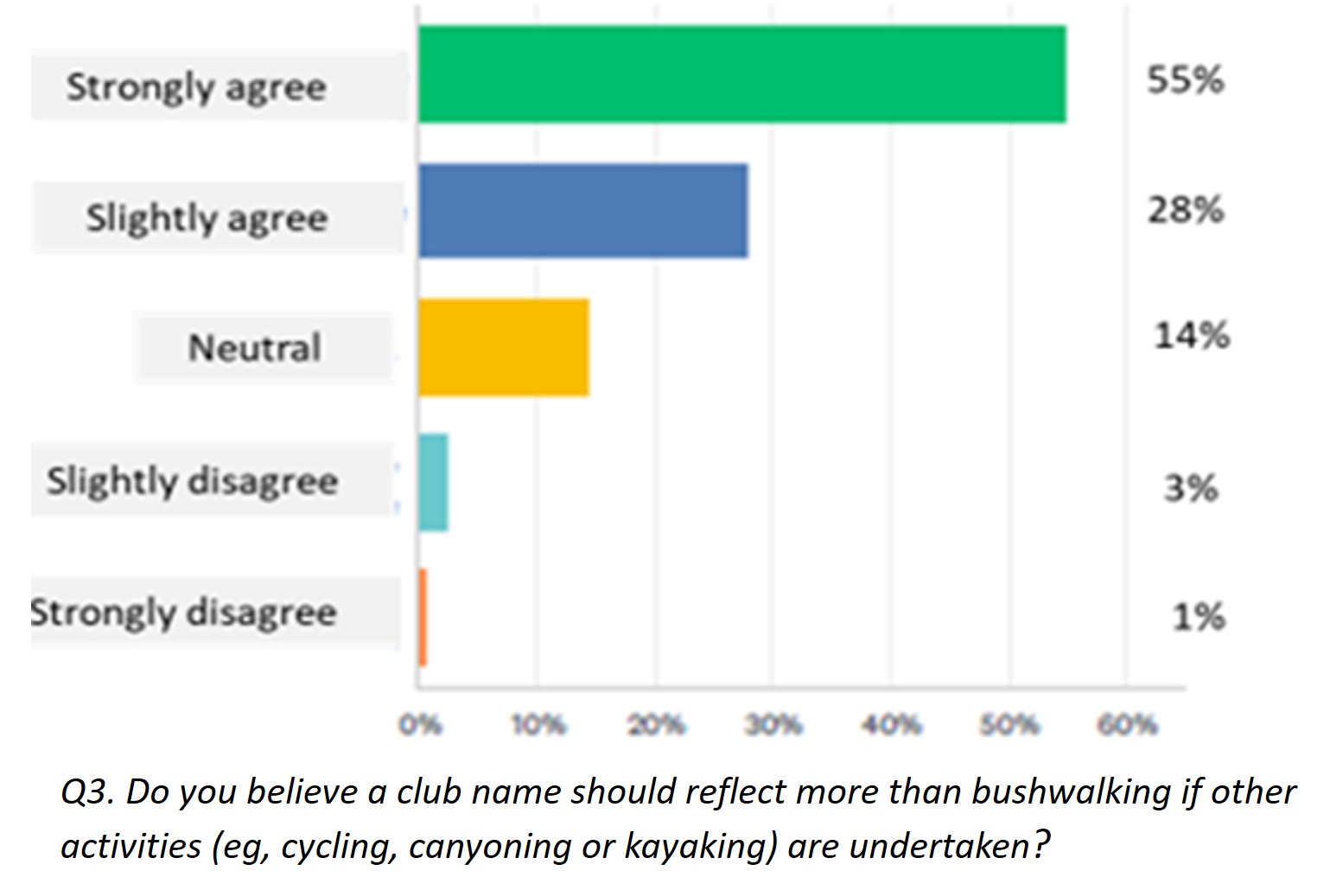
The need for a change in our names and terminology was also supported by results from the recent BNSW Outdoor adventure terminology survey. The survey, with over 170 respondents mostly from BNSW member clubs, revealed that 50% of respondents gave their first preference to hypothetical club names that included the term ‘Outdoor Adventure’, whilst only 8% gave their first preference to a club name with the sole term ‘Bushwalking’. A substantial majority of 83% agreed that a club name should include more than just ‘Bushwalking’ if other activities were also undertaken by the club (Figure 1).

As a key step in this rebranding process, I am advocating for the simple addition of a new term such as ‘Outdoor Adventure’ or merely just ‘Adventure’ into our names. Thus, for example, Bushwalking NSW might change to Bushwalking Adventure NSW. The fictional Highlands Bushwalking Club might change to Highlands Bushwalking Adventure Club.

I am convinced that such a relatively simple change would go a long way towards improving our brand and image, and reverse the aging and decline in our movement. Other measures will also be important in conjunction with the rebrand, such as enhancing social media presence, promoting the benefits of joining formal clubs and adopting welcoming measures for younger people.

BNSW expects to further explore opinions and avenues for a potential name change and rebrand during the 2024/2025 year.

Please consider this issue, and whether you support exploration of a possible simple name change and rebranding for Bushwalking NSW, and also for your own club. Please let BNSW know your thoughts by responding through the email below.
Jon Gray

Bushwalking NSW Vice President and Young People in Clubs (YPIC) Working Group.
Email: youngpeopleinclubs@bushwalkingnsw.org.au