For many women, the idea of bushwalking is appealing — fresh air, movement, time in nature — but the reality can feel intimidating. Questions like Where do I go? Who do I go with? Is it safe? Do I have the right skills? are often enough to stop people before they start.
This matters, because we know the benefits of walking — particularly in natural environments — are profound. Regular walking is one of the most accessible forms of physical activity, yet fewer than half of Australian women meet recommended physical activity guidelines. At the same time, rates of stress, anxiety and social isolation among women continue to rise, particularly following years of disruption, caring pressures and cost-of-living stress.
Bushwalking NSW Women’s Week exists to address these challenges — not with lectures or rules, but with experience.
With the support of Women NSW and Outdoors NSW ACT, Bushwalking NSW is hosting a state-wide bushwalking event, inviting women to get out of their comfort zone and explore around the next bend.
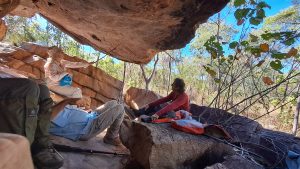
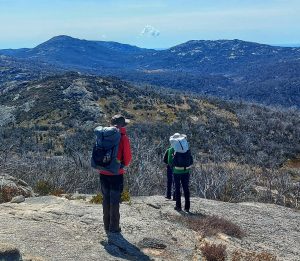
Across NSW, local bushwalking clubs are opening their doors and offering women a supported introduction to walking in nature. These aren’t extreme hikes or endurance challenges. They are local, entry-level walks led by experienced volunteers, designed to remove uncertainty and build confidence.
The evidence for this approach is compelling. Research consistently shows that spending time in green spaces can reduce stress, anxiety and symptoms of depression, while improving mood, focus and overall wellbeing. Walking in nature has also been shown to deliver greater mental health benefits than walking in urban or indoor environments alone. When people walk together, the benefits multiply — combining physical activity with social connection, belonging and peer support.
For women in particular, social connection is a critical protective factor for mental health. Group-based outdoor activities create space for conversation, friendship and shared discovery — especially important for women who may feel isolated, new to an area, returning to activity after a break, or unsure how to engage with outdoor recreation.
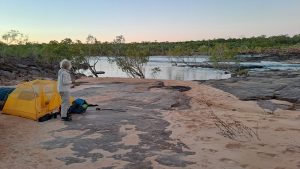
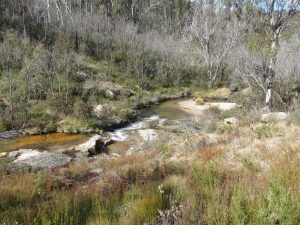
Bushwalking NSW’s Women’s Week also challenges a common misconception: that bushwalking requires specialist skills, expensive gear or distant locations. In reality, many of the most rewarding walking experiences are close to home — on local tracks, reserves and bushland — and supported by clubs deeply embedded in their communities.
By the end of the week, the hope is simple. That participants know where they can walk next, who they can walk with, and how to stay involved locally. Because when women feel welcome outdoors, the benefits don’t stop with a single walk. They ripple through families, communities and the places we care for — strengthening health, connection and stewardship of the bush for the long term.
See evidence below
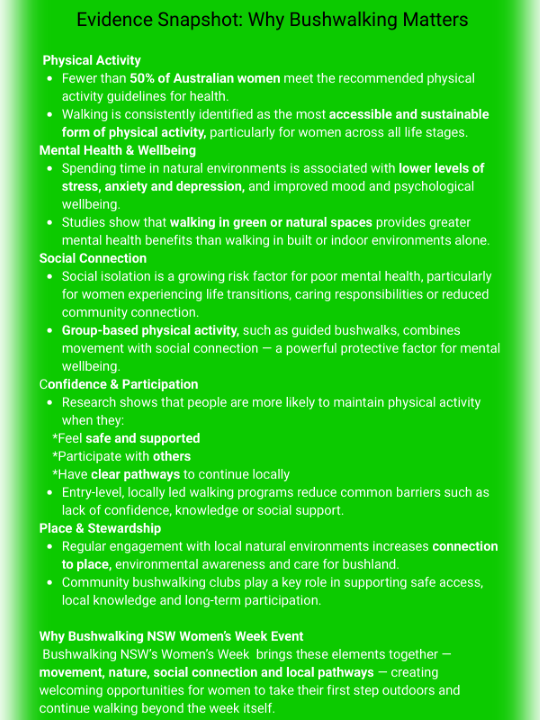
Why Bushwalking NSW Women’s Week Event
Bushwalking NSW’s Women’s Week brings these elements together — movement, nature, social connection and local pathways — creating welcoming opportunities for women to take their first step outdoors and continue walking beyond the week itself.
Supported by


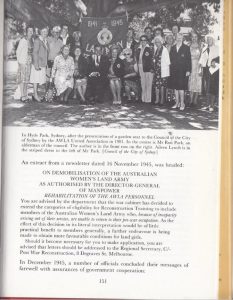 One list I have never seen is the names of those present on ANZAC Day 1948. Another list I could not find but that I could re-establish was the bushwalkers who served in WWII. Our book has a list of 191 bushwalkers, young men and women from Bushwalking NSW Clubs who served in uniform from the recognized armed services to the merchant marine and “Australian Women’s Land Army” (AWLA). One club, the Rucksack Club with almost equal numbers of both genders was noticeable for having more women than men in uniform.
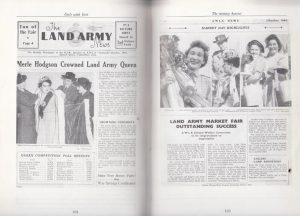 Australian women did play an important role in WWII. We may never fully know how many women were involved as code breakers. They were told to keep it a secret, and that it what they did well past 1945!